For laboratory research use only. Not for human consumption.

Talk to our research support team: 512-998-2437

Sale!Sale!
Have questions about

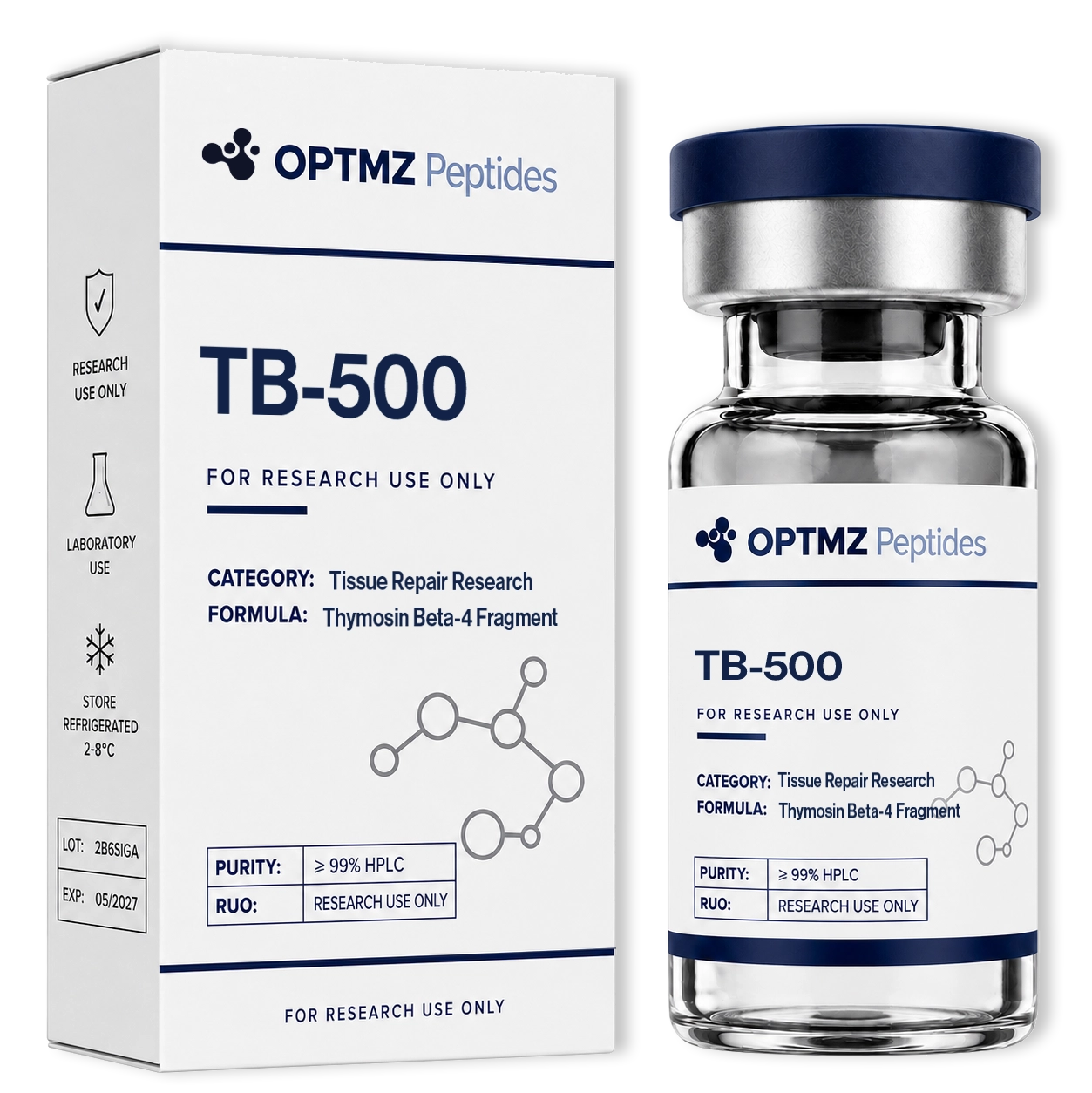
TB-500

Text us: 512-998-2437.

TB-500

Actin-Binding Research Peptide

Price range: $49.99 through $450.00

Quantity

Batch Number :

145030

Purity Percentage :

99.9

Identity Confirmation :

thymosin β4

Testing Methods Listed :

HPLC-UV/MS

Krause Analytical Credential Line :

200511

Test Date :

06/02/2026

All products currently listed on this site are for research purposed ONLY.

These products are for laboratory research only and not intended for medical use. They are not FDA-approved to diagnose, treat, cure, or prevent any disease. By purchasing, you certify they will be used solely for research and not for human or animal consumption.

Research Use Only

All research peptides supplied by OPTMZ Peptides are intended strictly for laboratory research applications and are not designed for medical use. These materials are not approved by the U.S. Food and Drug Administration (FDA) to diagnose, treat, cure, or prevent any disease. By purchasing, the buyer confirms use strictly for scientific research purposes and not for human or animal consumption.

Product Overview

TB-500 is a research peptide associated with Thymosin Beta-4 (Tβ4), an endogenous beta-thymosin involved in actin-associated cellular processes. The submitted OPTMZ TB-500 sample was analytically identified by the testing laboratory as Thymosin β4.

Thymosin Beta-4 is investigated in controlled experimental environments for its interaction with globular actin (G-actin) and its involvement in cytoskeletal organization, cell migration, endothelial-cell biology, and actin-dependent cellular processes. Published research describes Tβ4 as a major G-actin-sequestering peptide and has examined its effects on actin polymerization and cellular migration.

Technical Specifications

  • Product: TB-500
  • Quantity: 2 mg label claim
  • Analyte Identified: Thymosin β4
  • Research Classification: Thymosin Beta-4 / Actin-Binding Research Peptide
  • Compound Type: Research Peptide
  • Primary Research Target: G-actin / actin-associated cellular pathways
  • CAS Number: 77591-33-4
  • Purity: >99.9% chromatographic purity
  • Identity: Thymosin β4 confirmed by HPLC-UV-MS
  • Measured Content: 1.83 mg
  • Percent of Label: 91.6%
  • Analysis Method: HPLC-UV-MS
  • Laboratory: Krause Analytical
  • Lab Number: 200511
  • Project: 145030

These specifications come directly from the independent laboratory analysis of the submitted OPTMZ TB-500 sample. The report identifies the analyte as Thymosin β4, CAS 77591-33-4, with >99.9% chromatographic purity and confirmed identity.

Analytical & Testing

Each tested batch of TB-500 undergoes analytical evaluation to verify chromatographic purity, identity, peptide content, and analytical consistency. A corresponding Certificate of Analysis is maintained for the tested lot.

For the submitted OPTMZ Peptides sample, independent testing by Krause Analytical reported:

  • Chromatographic Purity: >99.9%
  • Identity: Thymosin β4 — Confirmed
  • Measured Content: 1.83 mg
  • Label Claim: 2 mg
  • Percent of Label: 91.6%
  • Testing Method: HPLC-UV-MS
  • CAS Number: 77591-33-4
  • Laboratory: Krause Analytical
  • Report Issued: February 6, 2026

The laboratory states that the data represent analysis of the submitted sample and met Krause Analytical’s internal quality-assurance criteria unless otherwise flagged.

Note: Unlike several of your other COAs, this report does not contain an endotoxin result, so I would not state that this particular TB-500 lot is endotoxin tested.

Handling & Storage

TB-500 should be handled by qualified professionals in controlled laboratory environments. Appropriate storage conditions should be maintained to preserve peptide stability and structural integrity.

Avoid unnecessary exposure to heat, moisture, and repeated temperature fluctuations. Experimental preparation, storage, and handling should follow validated laboratory procedures appropriate to the intended research application.

Research Context

Thymosin Beta-4 has been investigated extensively in experimental systems involving actin biology, cytoskeletal regulation, cellular migration, endothelial biology, and cellular signaling.

Research areas include:

  • G-actin binding and sequestration
  • Actin polymerization
  • Cytoskeletal organization
  • Cell migration
  • Endothelial-cell biology
  • Cellular adhesion
  • Actin-dependent signaling
  • Angiogenesis-associated experimental models
  • Cellular differentiation
  • Actin-binding protein interactions
  • Cytoskeletal structure/function relationships

Thymosin Beta-4 forms complexes with actin monomers and participates in regulation of the balance between polymerized and unpolymerized actin. Experimental work in living cells has demonstrated effects on actin filament organization when cellular Tβ4 concentrations are altered.

Research has also examined Thymosin Beta-4 in endothelial-cell migration models. Studies involving human umbilical vein endothelial cells (HUVECs), for example, have evaluated migration, adhesion, tube formation, and vascular sprouting as experimental endpoints.

These areas describe experimental research contexts and do not establish therapeutic efficacy or safety in humans.

Research Application Scope

TB-500/Thymosin Beta-4 continues to be evaluated as an experimental research material for studying actin dynamics and their relationship with cellular migration, cytoskeletal organization, endothelial-cell behavior, and intracellular signaling.

Its interaction with G-actin makes Thymosin Beta-4 particularly relevant to laboratory investigations examining actin polymerization and cytoskeletal regulation. Research has additionally examined PI3K/Akt/eNOS signaling in Tβ4-associated endothelial progenitor-cell migration models.

Use Statement

For laboratory research use only. Intended strictly for in vitro and controlled experimental research applications.

Disclaimer

All products currently listed on this site are for research purposes ONLY.

Description

Technical Specifications

  • Product: TB-500
  • Quantity: 2 mg label claim
  • Analyte Identified: Thymosin β4
  • Research Classification: Thymosin Beta-4 / Actin-Binding Research Peptide
  • Compound Type: Research Peptide
  • Primary Research Target: G-actin / actin-associated cellular pathways
  • CAS Number: 77591-33-4
  • Purity: >99.9% chromatographic purity
  • Identity: Thymosin β4 confirmed by HPLC-UV-MS
  • Measured Content: 1.83 mg
  • Percent of Label: 91.6%
  • Analysis Method: HPLC-UV-MS
  • Laboratory: Krause Analytical
  • Lab Number: 200511
  • Project: 145030

These specifications come directly from the independent laboratory analysis of the submitted OPTMZ TB-500 sample. The report identifies the analyte as Thymosin β4, CAS 77591-33-4, with >99.9% chromatographic purity and confirmed identity.

Analytical & Testing

Each tested batch of TB-500 undergoes analytical evaluation to verify chromatographic purity, identity, peptide content, and analytical consistency. A corresponding Certificate of Analysis is maintained for the tested lot.

For the submitted OPTMZ Peptides sample, independent testing by Krause Analytical reported:

  • Chromatographic Purity: >99.9%
  • Identity: Thymosin β4 — Confirmed
  • Measured Content: 1.83 mg
  • Label Claim: 2 mg
  • Percent of Label: 91.6%
  • Testing Method: HPLC-UV-MS
  • CAS Number: 77591-33-4
  • Laboratory: Krause Analytical
  • Report Issued: February 6, 2026

The laboratory states that the data represent analysis of the submitted sample and met Krause Analytical’s internal quality-assurance criteria unless otherwise flagged.

Note: Unlike several of your other COAs, this report does not contain an endotoxin result, so I would not state that this particular TB-500 lot is endotoxin tested.

Handling & Storage

TB-500 should be handled by qualified professionals in controlled laboratory environments. Appropriate storage conditions should be maintained to preserve peptide stability and structural integrity.

Avoid unnecessary exposure to heat, moisture, and repeated temperature fluctuations. Experimental preparation, storage, and handling should follow validated laboratory procedures appropriate to the intended research application.

Research Context

Thymosin Beta-4 has been investigated extensively in experimental systems involving actin biology, cytoskeletal regulation, cellular migration, endothelial biology, and cellular signaling.

Research areas include:

  • G-actin binding and sequestration
  • Actin polymerization
  • Cytoskeletal organization
  • Cell migration
  • Endothelial-cell biology
  • Cellular adhesion
  • Actin-dependent signaling
  • Angiogenesis-associated experimental models
  • Cellular differentiation
  • Actin-binding protein interactions
  • Cytoskeletal structure/function relationships

Thymosin Beta-4 forms complexes with actin monomers and participates in regulation of the balance between polymerized and unpolymerized actin. Experimental work in living cells has demonstrated effects on actin filament organization when cellular Tβ4 concentrations are altered.

Research has also examined Thymosin Beta-4 in endothelial-cell migration models. Studies involving human umbilical vein endothelial cells (HUVECs), for example, have evaluated migration, adhesion, tube formation, and vascular sprouting as experimental endpoints.

These areas describe experimental research contexts and do not establish therapeutic efficacy or safety in humans.

Research Application Scope

TB-500/Thymosin Beta-4 continues to be evaluated as an experimental research material for studying actin dynamics and their relationship with cellular migration, cytoskeletal organization, endothelial-cell behavior, and intracellular signaling.

Its interaction with G-actin makes Thymosin Beta-4 particularly relevant to laboratory investigations examining actin polymerization and cytoskeletal regulation. Research has additionally examined PI3K/Akt/eNOS signaling in Tβ4-associated endothelial progenitor-cell migration models.

Use Statement

For laboratory research use only. Intended strictly for in vitro and controlled experimental research applications.

Disclaimer

All products currently listed on this site are for research purposes ONLY.
Additional information

Pcs

Single Vial, Pack of 10

Strength

5mg

Reviews

There are no reviews yet.

Be the first to review “TB-500”

Your email address will not be published. Required fields are marked *

Research Profile

Research Classification

Thymosin Beta-4 Fragment / Actin-Binding Research Peptide

Research Discipline

Cell Biology / Cytoskeletal Biology / Vascular Biology

Primary Molecular Target

Actin / G-actin-associated pathways

Evidence Level

B

Molecular Structure

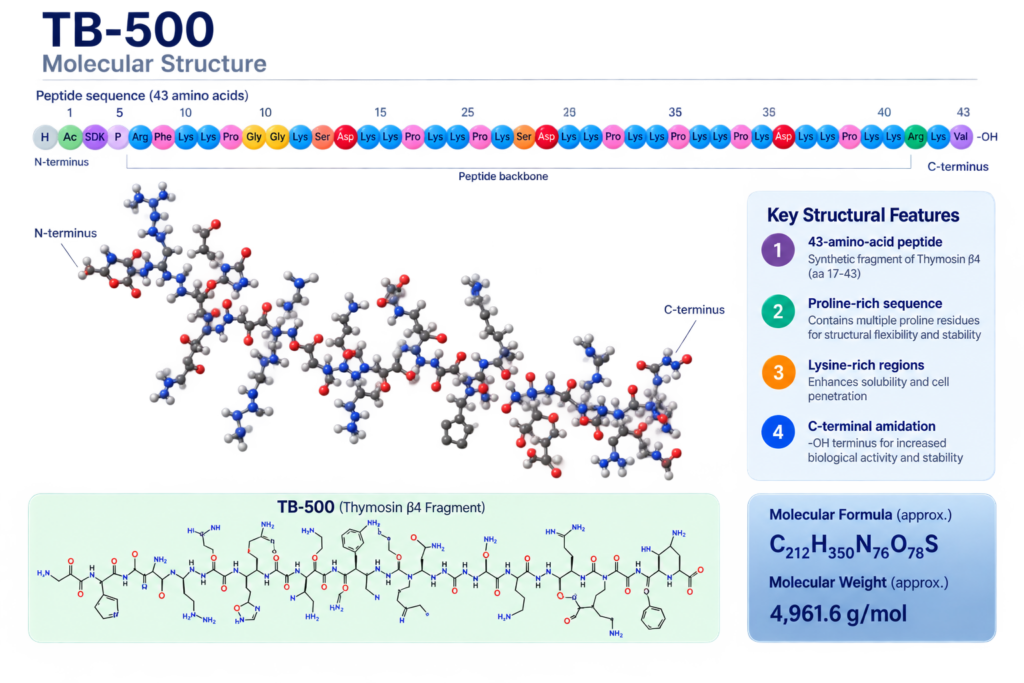
TB-500 is an N-terminally acetylated seven-amino-acid peptide corresponding to residues 17–23 within thymosin β4. This region overlaps the central actin-binding domain associated with thymosin β4's interactions with actin-dependent cellular processes.

Chemical Identity

Molecular FormulaCell Biology / Cytoskeletal Biology / Vascular Biology
Molecular Weight889.01 g/mol
CAS Number885340-08-9

Amino Acid Sequence

Ac-Leu-Lys-Lys-Thr-Glu-Thr-Gln-OH (Ac-LKKTETQ)

Experimental Research Applications

Actin-binding studies; endothelial-cell migration research; cellular adhesion models; cytoskeletal organization studies; angiogenesis-associated research; peptide structure-function studies

Experimental Systems

Human umbilical vein endothelial cells (HUVECs); endothelial-cell culture systems; vascular sprouting models; chick aortic arch models; biochemical actin-binding systems. The published fragment literature specifically includes HUVEC migration and vessel-sprouting models.

Specific Assays

Endothelial-cell migration assays; cell-adhesion assays; vascular sprouting assays; actin competition/binding experiments; tube-formation assays; cytoskeletal imaging

Measured Endpoints

Cell migration; cellular adhesion; vessel sprouting; tube formation; actin-dependent activity; cytoskeletal organization; endothelial-cell response

Analytical Characterization

Use the actual lot COA here. Do not state a specific purity, net content, LC-MS identity result, or endotoxin result until we have the COA for the TB-500 lot being sold.

Text us, our dedicated team is here to help.

Reach out and get a response within minutes