For laboratory research use only. Not for human consumption.
Talk to our research support team: 512-998-2437
By Dr. Leonard Haberman, Chief Science Officer, OPTMZ Peptides Published April 18, 2026 · Last updated April 18, 2026
Tesamorelin is a synthetic 44-amino-acid analog of human growth hormone-releasing hormone (GHRH), originally developed under the code TH9507. It is chemically designated N-(trans-3-hexenoyl)-[Tyr¹]hGRF(1-44)NH₂ acetate — a GHRH(1-44) sequence modified at the N-terminal tyrosine with a hexenoyl fatty acid group that resists proteolytic cleavage. This modification is the central reason tesamorelin has been studied as a stabilized pharmacological probe for GHRH receptor signaling in research contexts (Ferdinandi et al., 2007, PMID 17214611).
This page summarizes the molecular structure, receptor pharmacology, published research literature, and analytical verification standards relevant to tesamorelin as a research-grade peptide. All references are cited from peer-reviewed sources. Mechanistic claims are anchored to PubMed-indexed studies.
Tesamorelin is a synthetic growth hormone-releasing factor (GRF) analog derived from the full 44-amino-acid sequence of human GHRH (hGRF). Unlike shorter GHRH-pathway peptides such as sermorelin (GHRH 1-29), tesamorelin retains the complete native sequence and adds a structural modification at the N-terminus that prevents rapid enzymatic degradation.
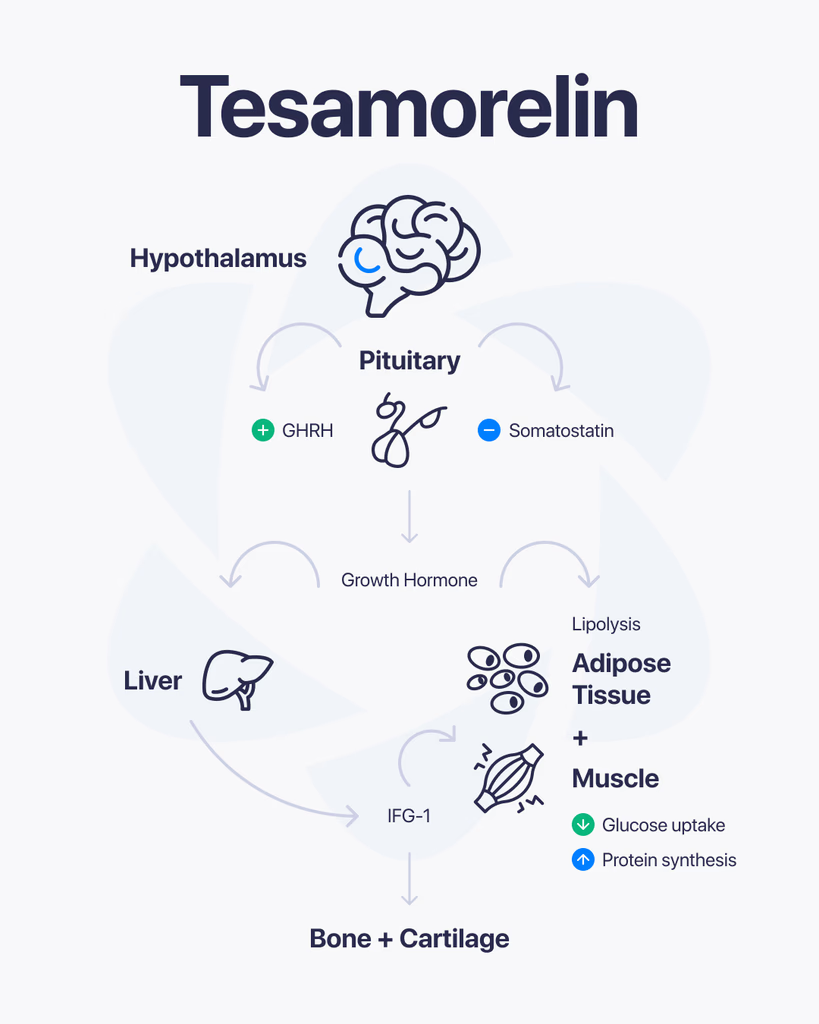
The compound activates the GHRH receptor (GHRH-R), a G protein-coupled receptor (GPCR) expressed on pituitary somatotropes. Receptor binding drives pulsatile release of endogenous growth hormone (GH) rather than introducing exogenous GH directly — a pharmacological distinction that has made it an object of research interest in studies of the GH/IGF-1 axis (Wang, 2009, PMID 19243281).
Tesamorelin’s full chemical designation is N-(trans-3-hexenoyl)-[Tyr¹]hGRF(1-44)NH₂ acetate. Breaking this down:
hGRF(1-44)NH₂ — the 44-amino-acid sequence of human growth hormone-releasing factor, C-terminally amidated
[Tyr¹] — tyrosine at position 1, retained from native GHRH
N-(trans-3-hexenoyl) — a six-carbon unsaturated fatty acid (hexenoyl) group covalently attached to the N-terminus
acetate — the salt form used in pharmaceutical and research-grade preparations
The trans-3-hexenoyl modification is the functional innovation. Native GHRH is cleaved rapidly by the enzyme dipeptidyl peptidase-IV (DPP-IV) at the Tyr¹-Ala² bond, producing the inactive GHRH(3-44) metabolite within minutes of administration. Attaching the hexenoyl group to the N-terminal tyrosine sterically blocks DPP-IV access, extending the molecule’s functional half-life in plasma (Ferdinandi et al., 2007).
The molecular weight of tesamorelin acetate is approximately 5,196 Da, which places it in the mid-range for synthetic peptide research compounds and informs HPLC method selection for purity verification.
Tesamorelin binds the GHRH receptor (GHRH-R), a class B GPCR located primarily on somatotroph cells in the anterior pituitary. The signal cascade has been characterized as follows in published research:
Receptor binding: Tesamorelin engages the extracellular N-terminal domain and transmembrane core of GHRH-R, mimicking the binding pose of native GHRH.
Gαs activation: Conformational change activates the heterotrimeric Gs protein, stimulating adenylate cyclase.
cAMP elevation: Intracellular cAMP rises, activating protein kinase A (PKA) and CREB-mediated transcription of the GH gene.
Pulsatile GH release: Somatotropes release stored GH into circulation in discrete pulses — a pattern that preserves the native pulsatility of endogenous GH secretion rather than producing sustained hormone elevation.
Hepatic IGF-1 induction: Circulating GH binds hepatic GH receptors, driving synthesis and release of insulin-like growth factor-1 (IGF-1), the major downstream effector of the GH axis.
Stanley and colleagues observed that tesamorelin administration in a controlled research population preserved physiological pulsatile GH secretion patterns and did not produce the insulin resistance commonly reported with exogenous GH administration (Stanley et al., 2011, PMID 20943777). This finding is frequently cited as the mechanistic rationale for classifying tesamorelin as a GHRH secretagogue rather than a GH replacement analog.
Published tesamorelin research spans pharmacokinetic characterization, GH-axis modulation, and metabolic parameter analysis. The following areas are well-represented in the peer-reviewed literature:
Multiple controlled studies have measured circulating GH and IGF-1 changes following tesamorelin administration. Stanley et al. (2011) documented preserved pulsatile GH secretion and a rise in mean IGF-1 levels without evidence of the supraphysiological IGF-1 surges associated with recombinant GH protocols.
Clemmons and colleagues reported 12-month data on tesamorelin pharmacokinetics and metabolic parameters (including glucose tolerance markers) in a controlled research population (Clemmons et al., 2017, PMC5472315). The dataset remains one of the longest continuous research observations of GHRH-pathway modulation published in the analog class.
The majority of published tesamorelin human research has been conducted in the context of HIV-associated lipodystrophy, a condition characterized by altered regional adipose distribution. Spooner and Olin (2012, PMID 22298602) reviewed the clinical trial literature in this population, and a 2024 meta-analysis examined randomized controlled trial outcomes across the literature base (Badran et al., 2024). OPTMZ Peptides reports this research record as documentary reference — we do not promote tesamorelin as a consumer product for any indication.
Recent review literature has situated tesamorelin within the larger context of GHRH-pathway research in diabetes and metabolic physiology (Steenblock & Bornstein, 2024, PMC12137473). Ongoing research continues to characterize GHRH receptor distribution in peripheral tissues and the role of local GHRH signaling outside the pituitary.
|
Parameter |
Native GHRH |
Tesamorelin |
|
Amino acid length |
44 (hGRF 1-44) |
44 (hGRF 1-44) |
|
N-terminal modification |
None |
trans-3-hexenoyl group |
|
DPP-IV resistance |
No — cleaved at Tyr¹-Ala² |
Yes — hexenoyl blocks access |
|
Plasma half-life |
~6-7 minutes |
~26-38 minutes (published range) |
|
Receptor affinity |
Reference |
Comparable to native GHRH |
The extended half-life is the primary pharmacological rationale for tesamorelin’s development. Native GHRH’s ~7-minute half-life makes it impractical as a research probe for studies requiring sustained receptor engagement; tesamorelin’s 4–5x extended window enables controlled experimental designs that would be logistically impossible with native GHRH (Ferdinandi et al., 2007).
Researchers frequently compare tesamorelin with other peptides that engage the GHRH pathway. The key structural and pharmacological distinctions:
Sermorelin (GHRH 1-29 NH₂)
Shortened 29-amino-acid fragment of GHRH retaining the biologically active N-terminal region
No DPP-IV resistance modification — rapid plasma clearance
Generally used in research protocols requiring shorter receptor engagement windows
CJC-1295 (DAC)
Modified GHRH(1-29) conjugated to a drug affinity complex (DAC) that binds serum albumin
Substantially extended half-life (~8 days) via albumin binding
Produces sustained GHRH receptor activation rather than pulsatile
CJC-1295 (no DAC) / Modified GRF 1-29
GHRH(1-29) with four amino acid substitutions for DPP-IV resistance
No albumin anchor — half-life ~30 minutes
Mechanistically similar to tesamorelin but based on the truncated 1-29 sequence
Tesamorelin
Full-length GHRH(1-44) with N-terminal hexenoyl modification
~26-38 minute half-life via DPP-IV resistance
Preserves pulsatile GH release pattern
The functional choice between these compounds in a research setting depends on the desired receptor engagement duration and whether the study requires the full 44-amino-acid sequence or a truncated fragment is sufficient.
For research-grade tesamorelin to be analytically reliable, each synthesized batch must be verified against four primary quality parameters:
Identity — confirmation that the synthesized sequence matches the intended tesamorelin amino acid sequence, typically via mass spectrometry (MS)
Purity percentage — quantification of the tesamorelin peak versus synthesis-related impurities, measured by reverse-phase HPLC
Endotoxin content — measured by LAL (Limulus Amebocyte Lysate) assay
Heavy metals — measured by inductively coupled plasma mass spectrometry (ICP-MS)
Reverse-phase HPLC separates tesamorelin from synthesis byproducts (deletion sequences, oxidation variants, and truncation products) based on hydrophobicity. A properly developed method for tesamorelin typically uses a C18 column, a water/acetonitrile mobile phase with 0.1% trifluoroacetic acid (TFA), and UV detection at 214 nm. The tesamorelin peak is integrated, and purity is expressed as a percentage of total peak area.
OPTMZ Peptides’ supplier standard is ≥98% HPLC purity per batch, verified by Krause Analytical, a DEA-registered, ISO/IEC 17025-certified analytical laboratory based in Austin, TX. Batches testing below 98% are rejected and never enter inventory. Most batches test in the 98.5–99.9% range.
Every tesamorelin batch we release has a published Certificate of Analysis (COA) accessible in the OPTMZ COA Vault, searchable by the batch number printed on the vial label. Researchers can cross-reference the batch number on any vial against the published HPLC chromatogram, mass spectrum, and endotoxin report before use. For a deeper discussion of HPLC methodology in peptide verification, see our overview of HPLC research peptide testing.
Tesamorelin has been used in research contexts as:
A pharmacological probe for the GHRH receptor and downstream GH/IGF-1 axis signaling
A controlled stimulus in studies measuring endogenous GH pulsatility
A comparative compound in analog SAR (structure-activity relationship) research
A characterized reference molecule in mass spectrometry detection method development for GHRH-family compounds
Current literature gaps include:
Limited published data on GHRH receptor expression and signaling in peripheral tissues (ongoing research)
Sparse comparative pharmacokinetic data directly between tesamorelin and newer GHRH analog research compounds
Ongoing characterization of downstream IGF-1 binding protein (IGFBP) dynamics in response to pulsatile vs. sustained GHRH-pathway stimulation
Researchers interested in comparative GHRH-pathway studies should consult the published half-life, AUC, and pulsatility data in Ferdinandi et al. (2007) and Stanley et al. (2011) when planning experimental designs.
For research-grade tesamorelin in lyophilized form:
Unopened lyophilized powder: Store at -20°C for extended stability. Protect from light.
After reconstitution: Store at 2-8°C. Use within 14-30 days based on reconstitution solvent and aseptic handling.
Reconstitution solvent: Bacteriostatic water (BAC water) is the standard research-grade solvent for lyophilized GHRH-pathway peptides. See our BAC water research supply listing for bacteriostatic water specifications.
Net peptide content: The labeled vial weight represents total peptide mass including the acetate counterion. Net peptide content is calculated as labeled weight × HPLC purity %. For a deeper discussion of why lyophilization matters for peptide stability, see our peptide lyophilization overview.
Every vial of research-grade tesamorelin supplied by OPTMZ is batch-labeled and cross-referenced to a published HPLC COA. Learn more about our testing methodology on our How We Test page.
Dr. Leonard Haberman is Chief Science Officer at OPTMZ Peptides, overseeing analytical quality assurance and third-party laboratory partnerships with a focus on HPLC-based purity verification and research-grade peptide compound validation. All research peptides sold by OPTMZ Peptides are intended strictly for laboratory research use only.
Every compound we sell has been independently tested and published — because researchers deserve suppliers they can verify, not just trust.
Tesamorelin is a synthetic 44-amino-acid analog of human growth hormone-releasing hormone (GHRH), chemically designated N-(trans-3-hexenoyl)-[Tyr¹]hGRF(1-44)NH₂ acetate. The hexenoyl modification at the N-terminus resists DPP-IV enzymatic cleavage, extending plasma half-life compared to native GHRH. It is used in research contexts as a pharmacological probe for the GHRH receptor and downstream GH/IGF-1 axis signaling (Ferdinandi et al., 2007).
Tesamorelin binds the GHRH receptor on pituitary somatotropes and stimulates endogenous pulsatile GH release via Gs-cAMP signaling. Exogenous GH administration introduces growth hormone directly into circulation, bypassing the pituitary and producing sustained rather than pulsatile hormone elevation. Published research has reported that tesamorelin administration preserves physiological pulsatility and does not produce the supraphysiological IGF-1 surges associated with recombinant GH protocols (Stanley et al., 2011).
Native GHRH has a plasma half-life of approximately 6-7 minutes due to rapid cleavage by DPP-IV at the Tyr¹-Ala² bond. Tesamorelin’s trans-3-hexenoyl N-terminal modification sterically blocks DPP-IV, extending the reported plasma half-life to approximately 26-38 minutes in published pharmacokinetic studies (Ferdinandi et al., 2007). This extended window enables controlled experimental designs that would be impractical with native GHRH.
Research-grade tesamorelin is verified primarily by reverse-phase HPLC (typically C18 column, water/acetonitrile gradient with 0.1% TFA, UV detection at 214 nm) to quantify the tesamorelin peak versus synthesis byproducts. Identity is confirmed by mass spectrometry, with additional testing for endotoxin (LAL) and heavy metals (ICP-MS). OPTMZ Peptides’ supplier standard is ≥98% HPLC purity per batch, verified by Krause Analytical (DEA-registered, ISO/IEC 17025-certified). Every batch has a published Certificate of Analysis in the OPTMZ COA Vault.
Sermorelin is GHRH(1-29)NH₂ — a truncated 29-amino-acid fragment retaining the biologically active N-terminal region of GHRH. Tesamorelin is GHRH(1-44)NH₂ with an N-terminal hexenoyl modification. Tesamorelin retains the complete 44-amino-acid native sequence and incorporates DPP-IV resistance, resulting in a longer half-life (~26-38 minutes vs. sermorelin’s rapid clearance). Both engage the same GHRH receptor, but tesamorelin’s extended duration and full-length sequence distinguish it in research applications requiring sustained receptor engagement or the complete GHRH(1-44) structure.
Lyophilized tesamorelin should be stored at -20°C, protected from light, for extended stability. After reconstitution in bacteriostatic water, store at 2-8°C and use within 14-30 days depending on aseptic handling protocols. Reconstitution should be performed with bacteriostatic water as the standard research-grade solvent. The labeled vial weight represents total peptide mass including acetate counterion; net peptide content is calculated as labeled weight multiplied by HPLC purity percentage.
Restricted Access · Research Use Only
Independently lab tested, every batch
COAs published and searchable by batch number
Policy version 2026-05-14-ruo-v1.0