For laboratory research use only. Not for human consumption.
Talk to our research support team: 512-998-2437
By Dr. Leonard Haberman, Chief Science Officer, OPTMZ Peptides Published: April 2, 2026 · Last updated: April 16, 2026
Sermorelin is a 29-amino-acid synthetic peptide corresponding to residues 1–29 of growth hormone-releasing hormone (GHRH 1–44), the biologically active N-terminal fragment. In research models, sermorelin binds the GHRH receptor on anterior pituitary somatotrophs, activates adenylate cyclase, and triggers a cyclic AMP–protein kinase A (cAMP–PKA) signaling cascade that has been studied for its role in growth hormone gene transcription and release (Walker, 2006). Investigators have used sermorelin to examine GHRH-receptor pharmacology, downstream second-messenger dynamics, and — more recently — its interactions with cell proliferation pathways in oncology research models (Chang et al., 2021).
This research overview summarizes what controlled studies have documented about sermorelin’s molecular mechanism, its half-life behavior in research contexts, what cell proliferation data has emerged, and how research-grade material is verified for laboratory use.
Sermorelin is the truncated 1–29 amino acid sequence of native human GHRH, retaining the receptor-binding domain required for GHRH-R activation. The full-length endogenous peptide is 44 amino acids, but research has established that the first 29 residues are sufficient to reproduce the agonist activity of the parent molecule (Walker, 2006). The compound is supplied for research as a lyophilized powder requiring reconstitution in bacteriostatic water before use in cell-based or in-vivo research protocols.
Structurally, sermorelin is classified as a GHRH analog rather than a growth hormone analog — a distinction that matters for experimental design. It does not interact directly with growth hormone receptors. Instead, it acts upstream at the pituitary level, making it a tool for studying GHRH-R signaling rather than peripheral GH-receptor activity.
The mechanism of action observed in pre-clinical research follows a defined sequence at the molecular level:
Receptor binding. Sermorelin binds to the GHRH receptor (GHRH-R), a class B G-protein-coupled receptor (GPCR) expressed on somatotroph cells of the anterior pituitary.
G-protein coupling. Receptor activation triggers conformational changes that activate the Gαs subunit of the associated heterotrimeric G-protein.
Adenylate cyclase activation. Gαs stimulates membrane-bound adenylate cyclase, which catalyzes the conversion of ATP to cyclic AMP (cAMP).
PKA cascade. Elevated intracellular cAMP activates protein kinase A (PKA), which phosphorylates target proteins including the transcription facto CREB.
Transcriptional regulation. Phosphorylated CREB binds the GH gene promoter, increasing transcription of growth hormone messenger RNA. Walker (2006) noted that this pathway “stimulates pituitary gene transcription of hGH messenger RNA, increasing pituitary reserve.”
This signaling architecture is what makes sermorelin useful in research: it engages a well-characterized GPCR pathway with measurable second-messenger readouts (cAMP accumulation assays, CREB phosphorylation Western blots, GH ELISA from culture supernatant).
A practical consequence observed in research contexts is that GH release driven by sermorelin remains under physiological feedback control by somatostatin and IGF-1, producing pulsatile rather than tonic patterns in animal models — a behavior distinct from exogenous recombinant GH administration (Walker, 2006).
Sermorelin has a notably short plasma half-life — published research data places it at approximately 11–12 minutes in circulation, which is characteristic of GHRH-family peptides and reflects rapid enzymatic degradation by dipeptidyl peptidase-IV (DPP-IV) and other peptidases (Walker, 2006).
For research workflows, this short half-life has several implications:
Sampling windows are narrow. Time-course experiments measuring GH release require closely spaced sampling intervals (typically every 5–15 minutes for the first hour).
Storage and reconstitution discipline matters. Once reconstituted, sermorelin should be maintained at 2–8°C and used within the verified stability window indicated on the batch certificate of analysis.
Comparison studies use longer-acting analogs. Researchers comparing pulsatile versus sustained GHRH-R activation often pair sermorelin against modified GHRH analogs with extended half-lives (CJC-1295 and modified GRF 1–29 derivatives).
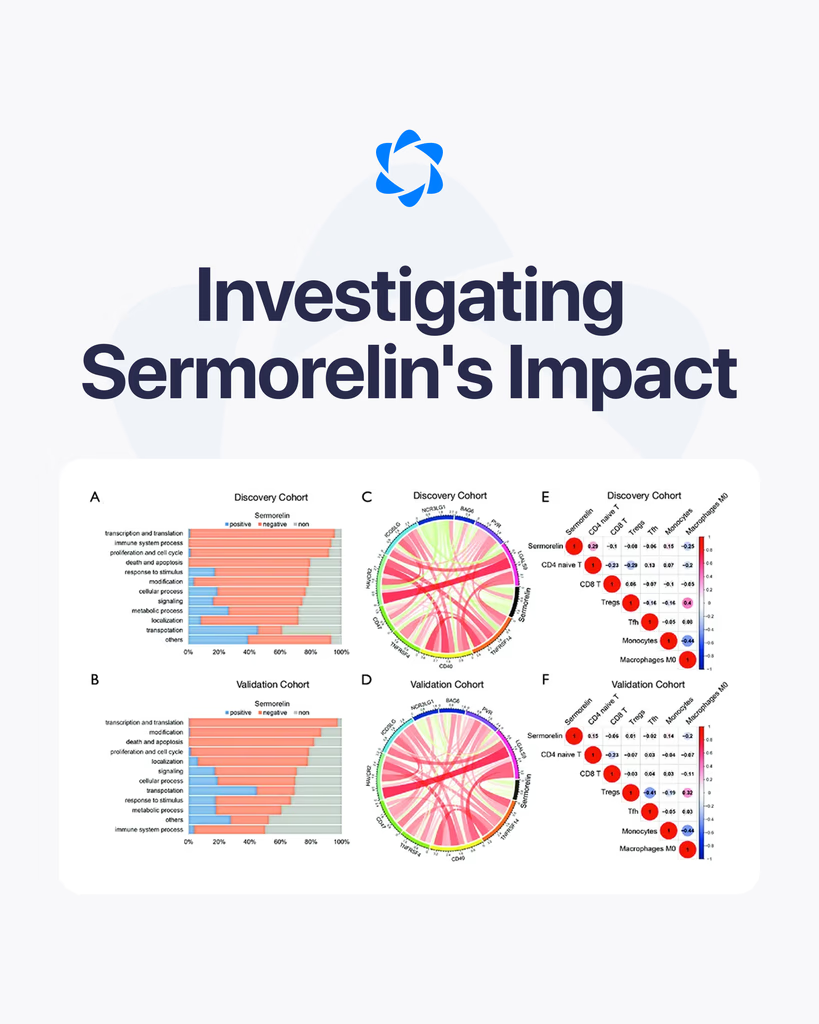
The most cited contemporary research on sermorelin and cellular proliferation is Chang et al. (2021), which used bioinformatic analysis (gene ontology and KEGG pathway enrichment) to examine sermorelin’s potential as a candidate for recurrent glioma research. The investigators reported that gene ontology analysis identified sermorelin as “closely related to cell proliferation functions” and proposed that the compound may inhibit tumor cell proliferation through cell cycle blocking mechanisms.
Independent supporting work by Muñoz-Moreno et al. (2018) investigated GHRH-receptor antagonists in LNCaP and PC3 prostate cancer cell lines. While that work studied antagonists rather than agonists, it established that the GHRH-R signaling axis is functionally engaged in proliferative cell models — providing the receptor-pathway context that makes sermorelin’s effects in Chang’s bioinformatic analysis biologically plausible.
It is important to characterize this body of work accurately: the cell proliferation data is bioinformatic and pre-clinical. There are no large-scale human studies investigating sermorelin’s effects on cellular proliferation. Researchers working in this area are typically running cell-line experiments, animal models, or computational analyses — not clinical trials.
For laboratory teams designing experiments in this space, the key methodological considerations are: receptor expression validation in the chosen cell line (GHRH-R is not expressed at meaningful levels in all immortalized lines), batch-to-batch purity verification of the sermorelin used (impurities or degradation products can confound proliferation readouts), and inclusion of appropriate controls for cAMP-PKA pathway activation.
Within the GHRH-analog family, sermorelin is distinguished by its short half-life and its identity as the unmodified 1–29 sequence. Researchers comparing GHRH-pathway tools typically evaluate:
CJC-1295 — a modified GRF 1–29 with a drug affinity complex (DAC) extension that significantly extends plasma half-life, used in research where sustained receptor engagement is the experimental variable.
Tesamorelin — a stabilized GHRH 1–44 analog with an N-terminal trans-3-hexenoyl modification that resists DPP-IV cleavage.
Ipamorelin — not a GHRH analog at all, but a ghrelin-receptor (GHS-R) agonist that converges on the same downstream output (GH release) through a parallel receptor system. This makes ipamorelin a useful comparator in studies dissecting the contributions of the two upstream pathways.
The choice between these tools depends on the experimental question. Sermorelin’s short half-life and unmodified sequence make it the cleanest tool for studying acute, pulsatile GHRH-R activation.
Sermorelin used in research applications requires analytical verification before any experimental data can be considered reliable. Identity and purity confounds are a documented source of irreproducible results in peptide research, and the verification standard for OPTMZ Peptides batches consists of:
HPLC purity analysis confirming ≥98% chromatographic purity. Most batches return between 98.5% and 99.9%.
Mass spectrometry identity confirmation verifying the molecular weight matches the expected sermorelin sequence (3,357.9 Da for the unmodified 1–29 amide).
Endotoxin testing by LAL assay
Heavy metals analysis by ICP-MS
Microbial testing for sterility verification
pH stability and visual inspection
All sermorelin batches are tested by Krause Analytical, a DEA-registered, ISO/IEC 17025-certified laboratory in Austin, Texas. Batch-specific certificates of analysis are published in the OPTMZ COA Vault and indexed by batch number printed on the vial label. Researchers can verify the analytical data for any batch they receive against the published COA before using the material in protocol work.
Dr. Leonard Haberman is Chief Science Officer at OPTMZ Peptides, overseeing analytical quality assurance and third-party laboratory partnerships with a focus on HPLC-based purity verification and research-grade peptide compound validation. All research peptides sold by OPTMZ Peptides are intended strictly for laboratory research use only.
References:
Walker RF. Sermorelin: A better approach to management of adult-onset growth hormone insufficiency? Clin Interv Aging. 2006;1(4):307-308. PMC2699646
Chang Y, et al. A potentially effective drug for patients with recurrent glioma. 2021. PMC8033379
Muñoz-Moreno L, et al. Growth hormone-releasing hormone receptor antagonists modify the expression of growth factors in LNCaP and PC3 cells. 2018. PubMed 29748961
Every compound we sell has been independently tested and published — because researchers deserve suppliers they can verify, not just trust.
Sermorelin is used in pre-clinical research to study GHRH receptor pharmacology, cAMP-PKA second-messenger signaling, and growth hormone gene transcription pathways. More recent bioinformatic work has examined its relationship to cell proliferation pathways in oncology research models (Chang et al., 2021). It is supplied for in-vitro and animal-model laboratory research only.
Published research data places sermorelin’s plasma half-life at approximately 11–12 minutes, reflecting rapid enzymatic degradation by dipeptidyl peptidase-IV (DPP-IV) and related peptidases (Walker, 2006). This short half-life requires close-interval sampling in time-course experiments and disciplined storage of reconstituted material.
Sermorelin consists of the first 29 amino acids of growth hormone-releasing hormone (GHRH 1–44), terminated as the C-terminal amide. This 29-residue fragment retains the receptor-binding domain required to activate the GHRH receptor. The molecular weight of the unmodified peptide is approximately 3,358 Da.
Research-grade sermorelin is verified through HPLC purity analysis (≥98% threshold), mass spectrometry identity confirmation, endotoxin testing by LAL assay, heavy metals analysis by ICP-MS, and microbial sterility testing. OPTMZ Peptides batches are tested by Krause Analytical, a DEA-registered, ISO/IEC 17025-certified laboratory, with batch-specific certificates of analysis published in the COA Vault.
Both compounds are GHRH 1–29 analogs, but CJC-1295 includes a drug affinity complex (DAC) extension that significantly extends its plasma half-life. Sermorelin is the unmodified sequence with a short half-life of approximately 11–12 minutes. Researchers select between them based on whether the experimental design requires pulsatile, acute receptor engagement (sermorelin) or sustained receptor activation (CJC-1295).
Lyophilized sermorelin is stable when stored at -20°C protected from light and moisture in its original sealed vial. For research use, the powder is reconstituted with bacteriostatic water to the working concentration required by the protocol. Once reconstituted, sermorelin should be maintained at 2–8°C and used within 14–30 days, as the peptide is susceptible to degradation in solution due to its short half-life and sensitivity to peptidase activity. Each batch certificate of analysis published in the OPTMZ COA Vault includes batch-specific stability and storage data.
Restricted Access · Research Use Only
Independently lab tested, every batch
COAs published and searchable by batch number
Policy version 2026-05-14-ruo-v1.0