For laboratory research use only. Not for human consumption.
Talk to our research support team: 512-998-2437
By Dr. Leonard Haberman, Chief Science Officer, OPTMZ Peptides Published: March 2, 2026 | Last Updated: April 15, 2026
Selank is a synthetic heptapeptide analog of tuftsin, a naturally occurring tetrapeptide involved in immune regulation. Developed at the Institute of Molecular Genetics of the Russian Academy of Sciences, Selank has been studied for its interactions with GABAergic neurotransmission, serotonin system modulation, and cognitive signaling pathways in pre-clinical and early-stage clinical research contexts.
Selank carries the amino acid sequence Thr-Lys-Pro-Arg-Pro-Gly-Pro. It is constructed from tuftsin (Thr-Lys-Pro-Arg) with a C-terminal extension (Pro-Gly-Pro) that was shown in early studies to extend the peptide’s metabolic stability compared to the parent compound.
The modification is significant from a research standpoint: native tuftsin degrades rapidly in biological environments, limiting its utility as a laboratory tool. The extended sequence in Selank has been reported to resist enzymatic degradation at rates substantially slower than tuftsin alone, making it a more tractable subject for controlled research protocols (Zozulia et al., 2008 — PubMed).
Selank is not a classified controlled substance in the United States and is available as a research-grade compound for in-vitro and pre-clinical laboratory investigation. All Selank supplied by OPTMZ Peptides is intended strictly for research use only.
Molecular formula: C₃₃H₅₇N₉O₁₀ Molecular weight: 751.85 g/mol Sequence: H-Thr-Lys-Pro-Arg-Pro-Gly-Pro-OH Classification: Synthetic anxiolytic peptide analog (pre-clinical research compound) Form supplied: Lyophilized powder, research grade, ≥98% purity by HPLC
The structural relationship to tuftsin means Selank carries functional interest across two distinct research domains: neurological signaling (via its independently observed interactions with brain neurotransmitter systems) and immune modulation (via its structural derivation from a known immunomodulatory tetrapeptide). These two lines of inquiry have developed largely in parallel across the published literature.
The majority of mechanistic Selank research has focused on three neurotransmitter systems: GABA, serotonin, and dopamine. Each represents a distinct research direction.
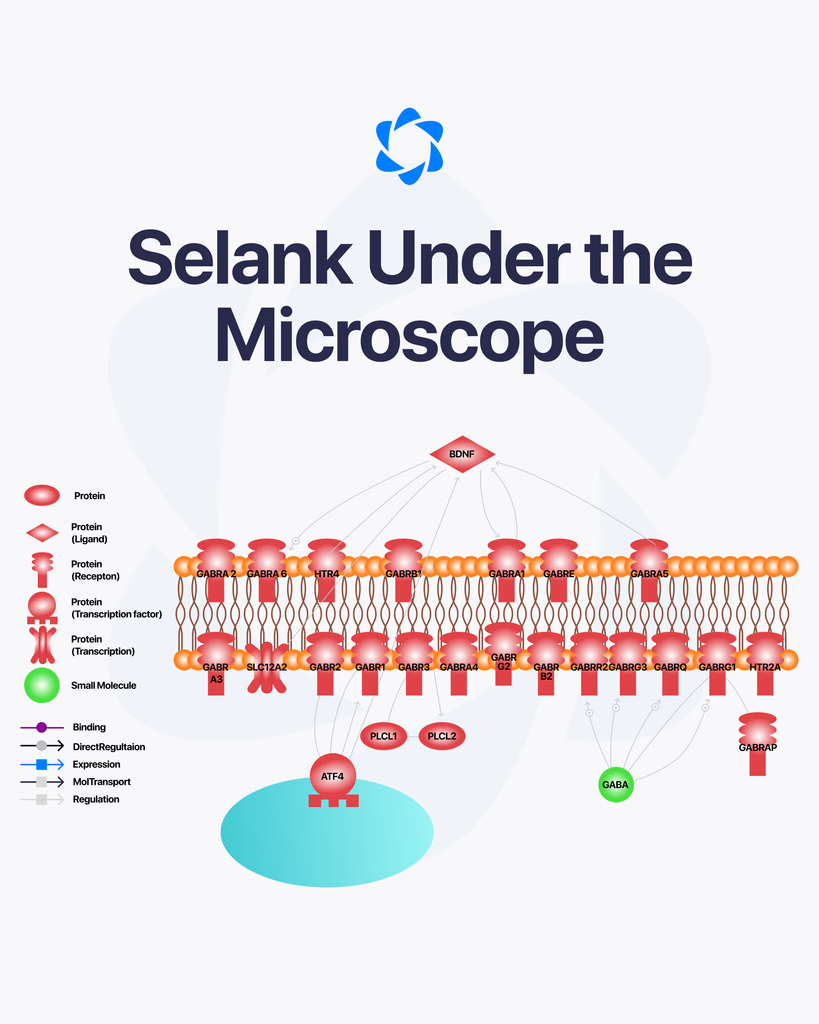
The most thoroughly documented line of Selank research involves gamma-aminobutyric acid (GABA), the primary inhibitory neurotransmitter in the mammalian central nervous system. A key study published in Frontiers in Pharmacology by Filatova et al. (2016) examined how Selank administration affects gene expression in rat brain tissue, with a particular focus on genes encoding GABA-A receptor subunits (Filatova EV et al., 2016 — PMC4757669).
The researchers found that Selank administration was associated with altered expression of multiple genes involved in GABAergic neurotransmission. Notably, expression changes were observed for genes encoding the alpha-1, alpha-2, and beta-2 subunits of the GABA-A receptor, as well as genes associated with GABA synthesis and transport. The authors interpreted these findings as consistent with Selank’s documented anxiolytic profile in animal models, though they noted that the precise receptor-level mechanism remained an area of active investigation.
This GABAergic interaction distinguishes Selank’s research profile from classic benzodiazepine compounds, which bind directly at the GABA-A receptor’s benzodiazepine site. The gene expression data suggest that Selank may modulate GABAergic tone through upstream regulatory mechanisms rather than direct receptor binding — a distinction that researchers have noted as potentially significant for its observed tolerability profile in animal models.
Research teams at the Institute of Pharmacology of the Russian Academy of Sciences have examined Selank’s effects on monoamine neurotransmitter turnover in animal models. Semenova et al. (2010) reported findings from a series of experiments in rats examining how Selank influenced serotonin and dopamine concentration in brain regions associated with stress response and memory consolidation (Semenova TP et al., 2010 — PubMed).
The data indicated that Selank administration was associated with increased serotonin content in hippocampal and frontal cortex tissue samples, with dopaminergic effects observed in striatal preparations. The authors proposed that these monoaminergic effects may contribute to the cognitive and stress-response outcomes observed in behavioral assays within the same study series.
A separate but related area of research interest concerns Selank’s potential interaction with brain-derived neurotrophic factor (BDNF) expression. BDNF is a neurotrophin with established roles in synaptic plasticity and neuronal survival research models. The gene expression study by Filatova et al. (2016) referenced above also examined BDNF-related genes and reported expression changes consistent with upregulation of BDNF signaling in cortical tissue samples following Selank administration in rats.
BDNF has attracted significant interest in neuroscience research as a marker of synaptic health and a potential subject for investigation in models of stress-related neuroadaptation. Selank’s observed interaction with BDNF-related gene expression has been cited in subsequent literature as one of several plausible mechanisms underlying the cognitive effects observed in behavioral research models.
Selank has been studied in rodent behavioral models designed to examine cognitive function, with particular focus on memory acquisition, retention, and retrieval tasks. Semenova et al. (2010) conducted a series of spatial learning and passive avoidance experiments in rats, finding that Selank-treated animals demonstrated statistically significant performance improvements in maze navigation and avoidance conditioning tasks compared to controls (Semenova TP et al., 2010 — PubMed).
The researchers examined whether these cognitive effects were separable from stress-response changes — an important methodological consideration given that anxiety and cognitive performance are frequently confounded in behavioral assays. Their data suggested that the cognitive effects could be partially dissociated from the anxiolytic effects, indicating distinct or partially independent mechanisms.
It is important to note that behavioral data from rodent models does not directly translate to human outcomes. These findings represent pre-clinical observations that define research hypotheses, not established clinical conclusions.
Selank’s structural derivation from tuftsin is the basis for a separate research domain focused on immune system interactions. Tuftsin itself has been studied extensively as an endogenous immunomodulatory compound, with documented effects on macrophage and neutrophil activity. Selank retains the core tuftsin tetrapeptide sequence, and several research groups have examined whether the synthetic analog preserves, attenuates, or extends these immune properties.
Uchakina et al. (2008) examined immunological parameters in human subjects receiving Selank in a clinical research context, reporting changes in cytokine profiles including alterations in IL-6 and tumor necrosis factor-alpha levels (Uchakina ON et al., 2008 — PubMed). The authors characterized these changes as consistent with immunomodulatory activity, though they noted that the clinical significance of the cytokine changes warranted further controlled investigation.
Additional pre-clinical work has examined Selank’s effects on enkephalin-degrading enzymes, which play roles in both pain modulation and immune signaling. This line of research connects Selank’s neurological and immunological research profiles through shared enzymatic pathways, and represents an active area of ongoing investigation.
The most substantial published clinical research on Selank was conducted in Russia, where it received regulatory approval as an anxiolytic agent for generalized anxiety disorder under the Russian pharmaceutical classification system. This approval context is worth noting for researchers situating Selank within the broader literature — it means that human clinical data exists, though most of it was generated under Russian regulatory frameworks and published in Russian-language journals, limiting its accessibility in Western literature.
The most widely cited English-language clinical study is Zozulia et al. (2008), which enrolled patients with generalized anxiety disorder and reported that Selank administration over a multi-week period was associated with statistically significant reductions in standard anxiety rating scale scores compared to baseline. Tolerability was characterized as favorable in this population, with the authors reporting an absence of sedation or motor impairment at the studied concentrations — a profile they contrasted with classical benzodiazepine compounds (Zozulia AA et al., 2008 — PubMed).
For researchers working in anxiety-related pre-clinical models, the Zozulia et al. (2008) paper provides a useful framing reference for hypothesis development, particularly regarding the non-sedating anxiolytic profile that the compound’s GABAergic mechanism is thought to underlie.
Research integrity begins with compound integrity. Every batch of Selank supplied by OPTMZ Peptides is independently tested by Krause Analytical, a DEA-registered, ISO/IEC 17025-certified analytical laboratory based in Austin, TX.
The testing panel for each Selank batch includes:
HPLC (High-Performance Liquid Chromatography): Purity determination by chromatographic separation. OPTMZ’s minimum acceptance threshold is 98.0% purity — batches below this standard are rejected before entering inventory. Most Selank batches test in the 98.5–99.9% range.
Mass Spectrometry: Confirms peptide identity against the expected molecular weight of 751.85 g/mol. Identity must be confirmed before a batch is released.
Endotoxin Testing (LAL method): Detects bacterial endotoxin contamination relevant to cell culture and in-vitro research applications.
Heavy Metals (ICP-MS): Screens for trace metal contamination.
Microbial Testing: Confirms sterility parameters.
pH Stability and Visual Inspection: Final quality checks on lyophilized powder appearance and reconstitution characteristics.
Every Certificate of Analysis generated from this panel is published to the OPTMZ COA Vault, where it is searchable by batch number. Batch numbers appear on vial labels. This is not claimed quality — it is published, downloadable, batch-level proof that can be independently verified.
Researchers evaluating Selank purity standards can review all published batch COAs directly at the COA Vault. No registration is required to access COA documentation.
Selank and Semax are frequently compared in research contexts because both are synthetic peptides developed in Russia, both have been studied for cognitive and neurological effects, and both are available as research compounds. The comparison is worth addressing directly because it represents a high-search-volume query (600 MSV) that reflects genuine researcher intent.
The key structural and mechanistic distinctions:
Selank (Thr-Lys-Pro-Arg-Pro-Gly-Pro) is an analog of tuftsin. Its primary mechanistic research focus is GABAergic modulation and immunomodulatory activity. Its pre-clinical and early clinical profile has been characterized as anxiolytic without sedation.
Semax (Met-Glu-His-Phe-Pro-Gly-Pro) is an analog of ACTH(4-7). Its primary mechanistic research focus is BDNF upregulation, dopaminergic activity, and cognitive enhancement in animal models. It has been studied more extensively as a nootropic compound than as an anxiolytic.
The two compounds have different parent molecules, different primary receptor targets, different neurotransmitter effects, and different research track records. Researchers selecting between them for study design should treat them as mechanistically distinct rather than interchangeable, though both compounds fall within the broader category of regulatory neuropeptides studied for CNS effects.
A dedicated comparison analysis will be published separately as the research literature warrants.
Dr. Leonard Haberman is Chief Science Officer at OPTMZ Peptides, overseeing analytical quality assurance and third-party laboratory partnerships with a focus on HPLC-based purity verification and research-grade peptide compound validation. All research peptides sold by OPTMZ Peptides are intended strictly for laboratory research use only.
Every compound we sell has been independently tested and published — because researchers deserve suppliers they can verify, not just trust.
Selank is a synthetic heptapeptide with the sequence Thr-Lys-Pro-Arg-Pro-Gly-Pro. It is an analog of tuftsin, a naturally occurring immunomodulatory tetrapeptide, extended at the C-terminus to improve metabolic stability. Selank has been studied in pre-clinical and early clinical research contexts for its effects on GABAergic neurotransmission, serotonin and dopamine signaling, and immune pathway modulation. It is supplied by OPTMZ Peptides as a research-grade compound for in-vitro laboratory investigation only.
The primary mechanistic research on Selank has examined three neurotransmitter systems: GABA (gamma-aminobutyric acid), serotonin, and dopamine. Gene expression studies have found that Selank administration is associated with altered expression of GABA-A receptor subunit genes in rat brain tissue (Filatova et al., 2016, PMC4757669). Separate studies have reported changes in serotonin and dopamine concentrations in hippocampal and frontal cortex tissue following Selank administration in animal models (Semenova et al., 2010). BDNF (brain-derived neurotrophic factor) expression changes have also been documented in the same gene expression research.
In rodent behavioral models, Selank-treated animals have demonstrated statistically significant performance improvements in spatial learning and memory retention tasks compared to control groups (Semenova et al., 2010). Separate studies examining stress-response markers have reported changes in anxiety-related behavioral parameters. In early-stage clinical research conducted in Russia, Zozulia et al. (2008) reported reductions in generalized anxiety rating scale scores in subjects receiving Selank, with tolerability characterized as favorable and an absence of sedation reported at studied concentrations. These are pre-clinical and early-stage findings; they do not constitute established clinical conclusions.
Every OPTMZ Selank batch is independently tested by Krause Analytical (DEA-registered, ISO/IEC 17025-certified, Austin TX) using HPLC-based purity analysis. OPTMZ’s minimum acceptance threshold is 98.0% purity — batches below this standard are rejected before entering inventory. Most batches test in the 98.5–99.9% range. Batch-specific purity data is published to the OPTMZ COA Vault, searchable by the batch number printed on the vial label.
Each Selank batch undergoes a seven-method testing panel at Krause Analytical: HPLC purity analysis, mass spectrometry identity confirmation, endotoxin testing (LAL method), heavy metals screening (ICP-MS), microbial testing, pH stability, and visual inspection. All Certificate of Analysis documentation is published to the OPTMZ COA Vault at /coa-vault/. Researchers can download any batch COA directly without registration.
No. Selank and Semax are distinct synthetic peptides with different amino acid sequences, different parent molecules, and different primary mechanistic research profiles. Selank is an analog of tuftsin with primary research focus on GABAergic modulation and immune signaling. Semax is an analog of ACTH(4-7) with primary research focus on BDNF upregulation and dopaminergic activity. They share a general classification as neuropeptide research compounds developed in Russia, but are not interchangeable in research design.
Selank’s structural derivation from tuftsin, a known immunomodulatory tetrapeptide, has generated research interest in immune signaling effects. Uchakina et al. (2008) reported changes in IL-6 and TNF-alpha cytokine profiles in human subjects receiving Selank, characterizing the findings as consistent with immunomodulatory activity. Separate pre-clinical work has examined Selank’s interaction with enkephalin-degrading enzymes, which play roles in both pain modulation and immune signaling. These represent early-stage research findings, not established clinical conclusions.
Restricted Access · Research Use Only
Independently lab tested, every batch
COAs published and searchable by batch number
Policy version 2026-05-14-ruo-v1.0